
Modern medical devices rely heavily on display systems for monitoring, diagnostics, imaging, and user interaction. As display technology evolves, manufacturers are increasingly looking beyond panel specifications and focusing on the overall optical performance of the display assembly.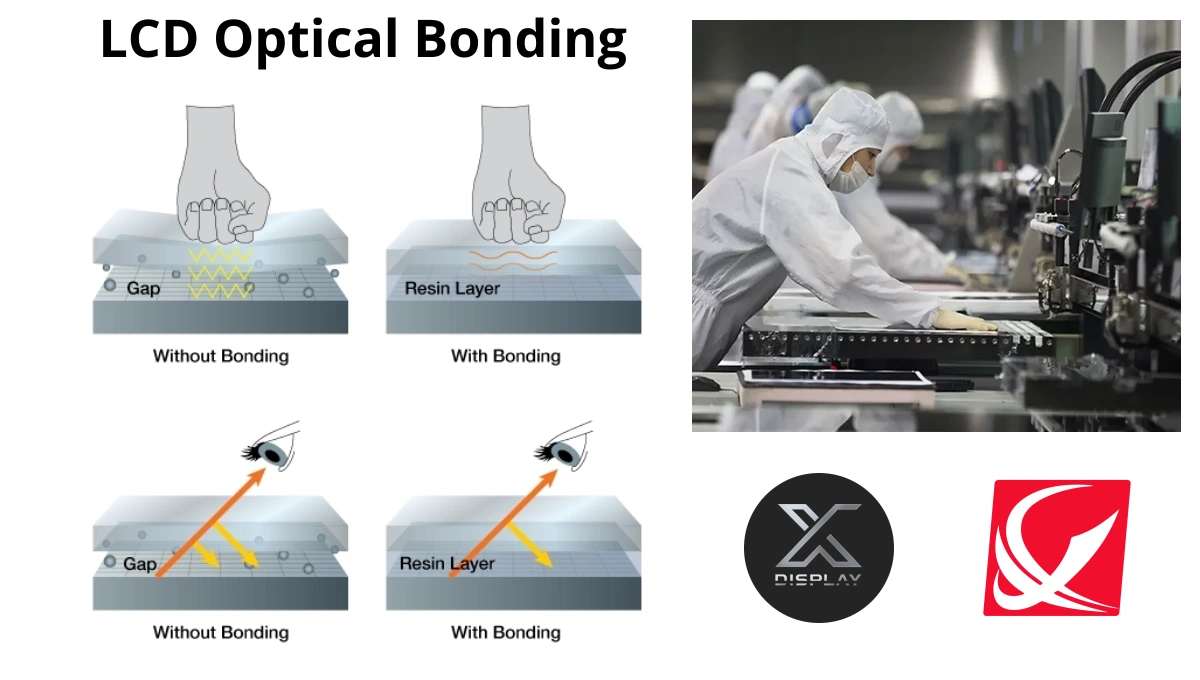
One technology that has become increasingly important in both industrial and medical applications is optical bonding.
Having worked with embedded display systems for many years, I have seen optical bonding evolve from a premium feature into a practical engineering solution that improves visibility, reliability, and user experience.
Claim: Optical bonding improves not only display visibility but also overall medical device reliability.
Table of Contents
- What Is Optical Bonding?
- How Does Optical Bonding Improve Visibility?
- Why Does Optical Bonding Enhance Reliability?
- What Advantages Does Optical Bonding Provide for Medical Touchscreens?
- How Can XIANHENG Support Medical Optical Bonding Projects?
What Is Optical Bonding?
Optical bonding is a process in which a transparent optical adhesive is used to eliminate the air gap between the LCD panel and the cover glass or touchscreen.
In traditional display assemblies, air gaps exist between multiple layers.
These air gaps can create:
- Internal reflections
- Reduced contrast
- Dust contamination risks
- Mechanical weakness
Optical bonding replaces the air gap with a transparent bonding material that improves light transmission and structural integrity.
For a broader overview of medical display requirements, see our Medical LCD Design Guide.
Claim: Optical bonding transforms multiple display layers into a more unified optical structure.
How Does Optical Bonding Improve Visibility?
Visibility is one of the most immediate benefits of optical bonding.
By eliminating internal reflections, optical bonding:
- Improves contrast ratio
- Increases perceived brightness
- Reduces reflected ambient light
- Enhances image clarity
This improvement is particularly valuable in:
- Portable medical equipment
- Mobile healthcare systems
- Emergency response devices
- Clinical environments with strong lighting
In many cases, optical bonding can improve real-world readability more effectively than simply increasing LCD brightness.
Claim: Better contrast often contributes more to usability than higher brightness alone.
Why Does Optical Bonding Enhance Reliability?
Beyond optical performance, bonding also improves mechanical and environmental durability.
Removing air gaps helps:
- Reduce internal condensation risks
- Improve shock resistance
- Minimize vibration-related failures
- Protect internal display components
Medical equipment frequently undergoes transportation, handling, and continuous operation.
A bonded display structure can better withstand these real-world conditions compared with traditional air-gap assemblies.
This directly supports the reliability principles discussed in medical display reliability considerations.
Claim: Optical bonding improves both optical and mechanical reliability.
What Advantages Does Optical Bonding Provide for Medical Touchscreens?
Optical bonding is especially valuable when combined with PCAP touchscreen technology.
Key benefits include:
- Improved touch accuracy
- Reduced parallax effect
- Better visual alignment
- Enhanced user experience
Parallax occurs when the displayed image appears separated from the touch surface due to air gaps.
In medical environments where precision matters, reducing parallax improves usability and operator confidence.
This complements the touchscreen advantages discussed in PCAP medical touchscreen technology.
Claim: Optical bonding significantly improves touchscreen precision and perceived quality.
How Can XIANHENG Support Medical Optical Bonding Projects?
Successfully implementing optical bonding requires experience in LCD integration, touch technology, and environmental reliability.
XIANHENG supports medical display projects through:
- Industrial and medical-grade TFT LCD solutions
- PCAP touchscreen integration
- Optical bonding customization
- Long-term supply support
- Engineering consultation during development
- Embedded display solution optimization
Explore our Industrial & Medical LCD Product Collection to learn more about available display solutions.
If you are developing a medical device that requires enhanced visibility and reliability, discuss your project with XIANHENG.
Claim: Successful optical bonding projects require integration expertise, not just component selection.
Conclusion
Optical bonding has become one of the most valuable technologies in modern medical display design.
By improving visibility, durability, touch performance, and long-term reliability, bonded displays help medical manufacturers create more effective and dependable products.
As medical devices continue to adopt advanced touchscreen interfaces, optical bonding is increasingly becoming a standard design consideration.
If you are evaluating optical bonding for a medical display project, contact XIANHENG for your LCD project.


