
Modern AI computing systems have evolved far beyond traditional servers. Today's AI infrastructure often consists of multiple GPU servers, high-speed networking equipment, storage arrays, and power management systems working together as a unified computing platform.
While cloud-based management software provides centralized visibility, local monitoring remains an essential part of daily operation. Engineers performing installation, maintenance, or troubleshooting frequently rely on integrated displays to obtain immediate system information without connecting external devices.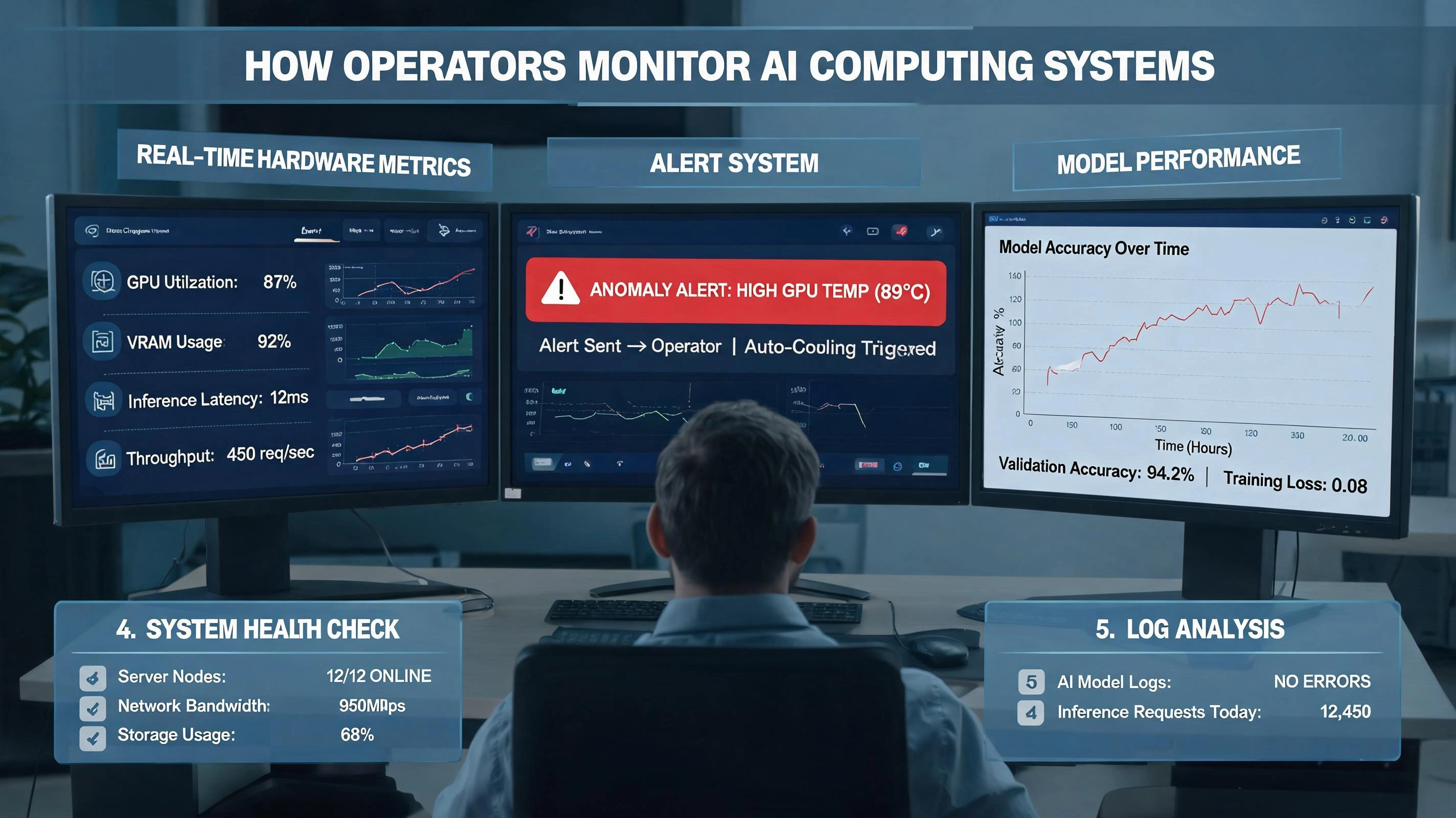
During the past decade of supporting industrial display projects, I have found that the most efficient maintenance environments combine remote management with clear local visual interfaces. A well-designed display allows engineers to verify system status within seconds instead of navigating multiple software tools.
Claim: Local display interfaces remain an important part of AI infrastructure management despite the widespread use of remote monitoring software.
Table of Contents
- What Information Do Operators Need to Monitor?
- Why Are Local Displays Still Necessary?
- Which Display Features Improve Operational Efficiency?
- What Should Engineers Consider When Selecting Displays?
- How Can XIANHENG Support AI Computing Projects?
What Information Do Operators Need to Monitor?
AI computing systems generate large amounts of operational data. While not every parameter needs to appear on a local display, operators benefit from immediate access to the information most relevant to equipment health and maintenance.
Typical monitoring information includes:
- GPU utilization
- CPU load
- Memory usage
- Storage capacity
- Power supply status
- Cooling fan operation
- Internal temperature
- Network connectivity
- System alarms
Displaying these parameters locally enables engineers to identify abnormal operating conditions quickly before they affect overall system performance.
Claim: Immediate access to system health information improves maintenance efficiency and reduces troubleshooting time.
Why Are Local Displays Still Necessary?
Many AI systems include sophisticated remote management software. However, local displays continue to provide advantages during installation, maintenance, and field service.
For example, technicians may need to:
- Verify hardware before network configuration
- Identify equipment inside large server racks
- Review alarm messages
- Confirm firmware versions
- Check system temperatures during commissioning
Performing these tasks directly on the equipment often saves valuable time compared with connecting external monitors or laptops.
As discussed in Why Do AI Servers Need Integrated Displays?, local visual interfaces remain highly practical even in remotely managed environments.
Claim: Local displays complement rather than replace remote management platforms.
Which Display Features Improve Operational Efficiency?
Not every LCD is suitable for AI infrastructure. Displays installed in computing equipment must prioritize reliability, readability, and long-term stability.
Important display characteristics include:
- Wide viewing angles
- High contrast ratio
- Industrial-grade TFT panels
- Long-life LED backlights
- Fast response time
- Stable operation during continuous use
Depending on the equipment, engineers may also require touch functionality for local configuration or maintenance tasks.
For compact AI appliances, PCAP touchscreens can simplify operation while reducing the number of physical buttons.
Claim: Display usability directly affects maintenance speed and operator experience.
What Should Engineers Consider When Selecting Displays?
Selecting an LCD module for AI infrastructure involves balancing performance with long-term support.
Before finalizing a display, engineers should evaluate:
- Expected product lifecycle
- Operating temperature range
- Mechanical installation space
- Display interface compatibility
- Power consumption
- EMC performance
- Future component availability
One mistake I frequently see is selecting consumer-grade displays simply because they are inexpensive or readily available. While this may reduce initial costs, it often creates supply and reliability challenges later in the product lifecycle.
Industrial-grade LCD modules typically provide better long-term availability and more consistent performance for professional equipment.
Claim: Lifecycle planning is just as important as technical specifications when selecting AI equipment displays.
How Can XIANHENG Support AI Computing Projects?
AI infrastructure manufacturers require display partners capable of supporting both technical development and long-term production planning.
XIANHENG supports AI hardware manufacturers through:
- Industrial TFT LCD modules
- PCAP touchscreen integration
- High-brightness display options
- Custom display assemblies
- LVDS, RGB, MIPI DSI and eDP interfaces
- Optical bonding solutions
- OEM & ODM engineering support
- Long-term lifecycle management
Whether you are developing GPU servers, AI appliances, edge computing platforms, or intelligent industrial equipment, our engineering team can recommend display solutions that match your performance and lifecycle requirements.
Explore our Industrial LCD Product Collection to learn more about available display technologies.
If you are planning an AI computing project, reach out to XIANHENG to discuss your display requirements.
Claim: Choosing the right display partner helps improve both product quality and long-term project success.
Conclusion
Although AI computing systems increasingly rely on sophisticated remote management platforms, integrated LCD displays continue to provide valuable operational benefits.
By presenting real-time hardware status, simplifying maintenance procedures, and improving local diagnostics, industrial displays contribute to more reliable and maintainable AI infrastructure.
As AI deployments continue to expand across industries, dependable display solutions will remain an essential component of intelligent computing equipment.
If you are evaluating industrial display solutions for AI infrastructure, contact XIANHENG for your project.


